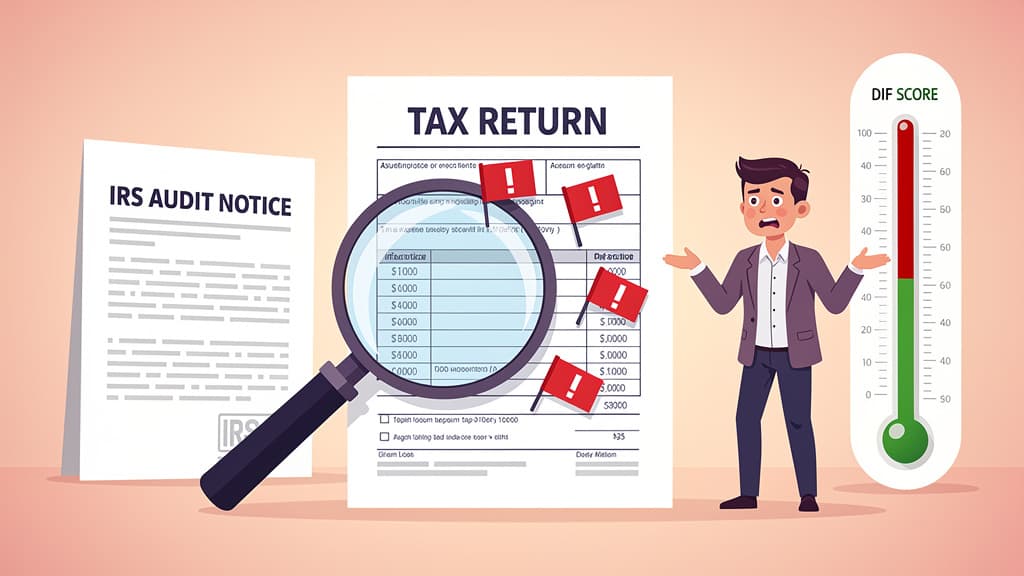
The estimated tax penalty accrues at a 7% annual rate in the third quarter of 2026 (July 1 through September 30, per Rev. Rul. 2026-10) — charged quarter by quarter on every dollar you were required to prepay but didn't. The rate is not fixed: the IRS resets it every quarter (7% in Q1 2026, 6% in Q2, 7% in Q3), and each underpaid quarter keeps accruing at whatever rate is in effect until you pay.
Key takeaways:
The penalty applies when you owe $1,000 or more at filing time and didn't meet a safe harbor. The IRS assesses it automatically — no separate notice, it's added to your tax bill.
The rate is the federal short-term rate plus 3 points, reset quarterly by the IRS. You can file on time and still owe it — it's about when you paid during the year, not whether you filed.
Safe harbor blocks the penalty entirely: pay 100% of last year's total tax (110% if prior-year AGI topped $150,000) in four equal installments.
Four exceptions can wipe it: a balance due under $1,000, zero prior-year tax liability, casualty/disaster, and new retirement (after age 62) or disability — the last two via a Form 2210 waiver.
Already behind? A catch-up payment stops the clock. The penalty runs from each quarterly due date until the day you actually pay.
What is the estimated tax penalty? A charge the IRS assesses when you don't pay enough tax throughout the year via quarterly estimated payments or withholding.
2026 Penalty Overview:
Factor
Details
Penalty rate
7% annual rate in Q3 2026 (reset quarterly by the IRS; 6% in Q2 2026)
Who owes it
Anyone who owes $1,000+ at filing time and didn't meet safe harbor
How it's calculated
Per quarter, on the underpaid amount, from due date to payment date
Safe harbor (standard)
Pay 100% of prior year's total tax in four installments
Safe harbor (high income)
Pay 110% if prior year AGI exceeded $150,000
Current year alternative
Pay 90% of current year's actual tax
Form to calculate/waive
Form 2210 (Underpayment of Estimated Tax)
Key point: The penalty is not discretionary. The IRS calculates it automatically when you file. You don't receive a separate notice — it's added to your tax bill.
The estimated tax penalty — formally called the "underpayment of estimated tax penalty" — is a charge the IRS imposes when you fail to pay enough tax during the year through quarterly estimated payments or withholding.
The US tax system operates on a pay-as-you-go basis. W-2 employees have taxes withheld from every paycheck. Self-employed individuals, investors, retirees, and anyone with income that doesn't have withholding must make quarterly estimated payments instead.
If your quarterly payments fall short of the required amount, the IRS charges a penalty on the difference — calculated separately for each quarter.
This is not a late-filing penalty. You can file your return on time and still owe the estimated tax penalty if you didn't pay enough during the year. It's also separate from the late-payment penalty (which applies when you don't pay your balance due by April 15).
Legal citation:IRC §6654 governs the penalty for underpayment of estimated income tax by individuals.
The IRS sets the estimated tax penalty rate quarterly. It's based on the federal short-term rate plus 3 percentage points.
For the third quarter of 2026 (July 1 through September 30), the rate is 7% annually (Rev. Rul. 2026-10). It resets every quarter — in 2026 so far: 7% in Q1, 6% in Q2, 7% in Q3 — and each quarter's underpayment accrues at whatever rate is in effect while it remains unpaid. The examples in this guide assume the current 7% rate holds for the full penalty period.
How the rate is applied:
The penalty runs from the due date of the quarterly payment to the earlier of:
The date the underpayment is actually paid, or
April 15 of the following year (the filing deadline)
Example: Q1 penalty calculation (at the current 7% rate)

Required Q1 payment: $5,000
Actual Q1 payment: $2,000
Underpayment: $3,000

Penalty period: April 15, 2026 to April 15, 2027 = 12 months
Penalty: $3,000 × 7% × (12/12) = $210

If you catch up and pay the $3,000 on June 15:
Penalty period: April 15 to June 15 = 2 months
Penalty: $3,000 × 7% × (2/12) = $35
The penalty is calculated separately for each quarter. Missing Q1 and catching up in Q2 results in a smaller penalty than missing all four quarters.
Legal citation:IRC §6621(a)(2) sets the underpayment rate at the federal short-term rate plus 3 percentage points.
Enter how much you came up short each quarter — each missed quarter runs on its own clock until you pay or file.
$
Required quarterly payment minus what you actually paid.
4 quarters
Estimated penalty
$467
Assessed automatically when you file — no separate notice, it's added straight to your tax bill on top of the balance due.
Q1 (due April 15) — 12 of 12 months$175
Q2 (due June 15) — 10 of 12 months$146
Q3 (due September 15) — 7 of 12 months$102
Q4 (due January 15) — 3 of 12 months$44
Entirely avoidable: pay 100% of last year's total tax (110% if prior-year AGI topped $150,000) in four equal installments and the safe harbor blocks this penalty — no matter what you actually owe in April.
Assumes the current 7% rate (Q3 2026 — the IRS resets it quarterly; it was 6% in Q2) holds and each shortfall stays unpaid until April 15, 2027. Form 2210 counts exact days at each quarter's actual rate — catching up sooner shrinks each quarter's charge.
Safe harbor rules are the most reliable way to avoid the estimated tax penalty. If you meet either safe harbor threshold, the IRS cannot assess a penalty — regardless of how much you actually owe at filing time.
Pay 100% of your prior year's total tax liability in four equal quarterly installments.
Prior year total tax (Form 1040, Line 24): $20,000

Quarterly payment: $20,000 ÷ 4 = $5,000

Pay $5,000 on April 15, June 15, September 15, January 15 → No penalty
If your prior year AGI exceeded $150,000 ($75,000 if married filing separately), the threshold increases to 110%:
Prior year total tax: $30,000
Prior year AGI: $200,000 (exceeds $150,000)

Safe harbor: $30,000 × 110% = $33,000
Quarterly payment: $33,000 ÷ 4 = $8,250
This method works because you know last year's tax with certainty. There's no guessing or estimating required.
Legal citation:IRC §6654(d)(1)(B) establishes the prior year safe harbor. IRC §6654(d)(1)(C) establishes the 110% threshold for high-income taxpayers.
This method carries risk: if you underestimate your income and pay less than 90% of actual tax, the penalty applies. The prior year method is safer because you know the exact number in advance.
Legal citation:IRC §6654(d)(1)(A) defines the current year payment requirement.
If your total tax in the prior year was $0 and you were a US citizen or resident for the entire prior year, no penalty applies for the current year — regardless of how much you owe.
This commonly applies to:
People who had no income in the prior year
Those whose deductions and credits wiped out all tax liability
Individuals who were students or not working in the prior year
The IRS can waive the penalty if the underpayment was caused by a casualty event, disaster, or other unusual circumstance where imposing the penalty would be inequitable.
Examples:
Natural disaster that disrupted your business
Federally declared disaster affecting your area
Significant financial hardship caused by events beyond your control
You must apply for this waiver — it's not automatic. Use Form 2210 and attach documentation.
If you retired (after reaching age 62) or became disabled during the tax year or the prior tax year, and the underpayment was due to reasonable cause rather than willful neglect, the IRS may waive the penalty.
This exception recognizes that newly retired or disabled individuals may not immediately adjust to making estimated payments on retirement income.
Step 1: Check Box A, B, C, or D in Part II of Form 2210 to indicate which exception applies
Step 2: Complete Schedule AI (Annualized Income Installment Method) if applicable
Step 3: Attach supporting documentation for casualty, disaster, or retirement/disability exceptions
Step 4: File Form 2210 with your Form 1040
Pro tip: If you're requesting a waiver for reasonable cause, write a clear explanation letter. Include specific dates, amounts, and circumstances. The IRS reviews these requests manually.
Situation: A graphic designer earned $85,000 in net self-employment income in 2026. She made no estimated payments and had no withholding. Prior year tax: $0 (first year self-employed).
Self-employment tax: $85,000 × 92.35% × 15.3% = $12,010
Federal income tax (single, standard deduction): ~$7,200
Total tax: ~$19,210

Required quarterly payment (90% current year): $19,210 × 90% = $17,289
Per quarter: $17,289 ÷ 4 = $4,322

Underpayment per quarter: $4,322

Q1 penalty: $4,322 × 7% × (12/12) = $303
Q2 penalty: $4,322 × 7% × (10/12) = $252
Q3 penalty: $4,322 × 7% × (7/12) = $176
Q4 penalty: $4,322 × 7% × (3/12) = $76

Total penalty: $807
Total owed at filing: $19,210 + $807 = $20,017
Lesson: The $807 penalty is avoidable with quarterly payments. For guidance on setting up quarterly payments, see our quarterly estimated taxes guide.
Situation: A software engineer earns $120,000 W-2 salary with $25,000 withholding. He also earns $40,000 from freelance consulting. Prior year total tax: $28,000.
Prior year tax: $28,000
Prior year AGI: $145,000 (under $150,000)
Required safe harbor payment: $28,000 ÷ 4 = $7,000/quarter

W-2 withholding per quarter: $25,000 ÷ 4 = $6,250
Additional estimated payment needed: $7,000 - $6,250 = $750/quarter

If he pays $750/quarter in estimated payments: No penalty
If he pays nothing: $750 × 4 quarters underpaid → Penalty of ~$140
Lesson: W-2 withholding counts toward the safe harbor. You only need estimated payments for the gap. Alternatively, increase your W-2 withholding by filing a new W-4.
Situation: A landscaping business earns most of its income in Q2 and Q3. Annual net profit: $120,000. Prior year tax: $30,000. Prior year AGI: $110,000.
Income by quarter:
Q1: $5,000
Q2: $45,000
Q3: $50,000
Q4: $20,000

Using prior year safe harbor: $30,000 ÷ 4 = $7,500/quarter
Pay $7,500 each quarter regardless of when income arrives → No penalty

Using annualized income method (Form 2210, Schedule AI):
Q1 required: Based on $5,000 annualized → Lower payment
Q2 required: Based on $50,000 cumulative annualized → Higher payment
Q3 required: Based on $100,000 cumulative annualized → Higher payment
Q4 required: Based on $120,000 actual → Highest payment
Lesson: The annualized income method lets seasonal businesses pay less in slow quarters without penalty. But the prior year safe harbor is simpler and still works.
Situation: A management consultant earned $300,000 net profit in 2025 and expects $350,000 in 2026. Prior year AGI: $290,000 (over $150,000 threshold).
Prior year total tax: $85,000
Safe harbor (110%): $85,000 × 110% = $93,500
Quarterly payment: $93,500 ÷ 4 = $23,375

Pay $23,375 each quarter → No penalty, even if actual 2026 tax is $110,000+

Remaining balance at filing: $110,000 - $93,500 = $16,500
(Due by April 15, but no penalty on this amount)
Lesson: High-income taxpayers must use the 110% threshold, but it still provides penalty protection regardless of how much actual tax increases.
If your income arrives unevenly throughout the year, the annualized income installment method prevents you from being penalized for low payments in quarters when you earned little.
Instead of dividing your annual tax by four, you calculate your actual tax liability based on income earned through each quarterly cutoff, then annualize it.
If you have a W-2 job in addition to self-employment income, you can increase your withholding by submitting a new Form W-4 to your employer. W-2 withholding is treated as paid evenly throughout the year — even if the extra withholding happens entirely in Q4. Check where your current withholding stands with the tax withholding calculator before deciding how much to add.
This is a powerful strategy because it retroactively covers earlier quarters. If you realize in October that you're short on estimated payments, increasing W-2 withholding for the rest of the year can eliminate penalties for Q1-Q3.
The penalty is calculated from the due date to the payment date. A late payment reduces the penalty compared to waiting until April 15.
Q1 payment due: $5,000 on April 15
You pay $0 on April 15 and $5,000 on July 15

Penalty with late payment: $5,000 × 7% × (3/12) = $88
Penalty if you wait until April 15 next year: $5,000 × 7% × (12/12) = $350

Savings from late payment: $262
You can make estimated payments at any time. If you missed Q1, pay the Q1 amount along with Q2 on the Q2 due date. The penalty for Q1 will be smaller because the underpayment lasted only two months instead of twelve.
Problem: A self-employed person misses all quarterly payments, then assumes they can file an extension to avoid the penalty.
Impact: Filing an extension extends the time to file your return — not the time to pay. The estimated tax penalty is based on quarterly payment dates, not your filing date. An extension does nothing to reduce or eliminate this penalty.
Solution: Make quarterly payments on time. If you've already missed payments, make a catch-up payment as soon as possible to shorten the penalty period.
Problem: A business owner thinks the $1,000 threshold means they only owe a penalty if the penalty itself exceeds $1,000.
Impact: Misunderstanding leads to no quarterly payments. The $1,000 threshold applies to the tax owed at filing time — not the penalty amount. If you owe more than $1,000 at filing and didn't meet safe harbor, the penalty applies.
Solution: The $1,000 test is simple: total tax minus (withholding + estimated payments + refundable credits). If the result is $1,000 or more, you needed to make estimated payments.
Problem: A business owner with $160,000 AGI in the prior year uses 100% of prior year tax as the safe harbor.
Impact: Since the prior year AGI exceeded $150,000, the safe harbor threshold is 110%, not 100%. Paying only 100% leaves the taxpayer exposed to a penalty on the 10% difference.
Solution: Check your prior year AGI. If it exceeded $150,000 (or $75,000 married filing separately), multiply the prior year tax by 110% for the correct safe harbor amount.
Problem: Making federal estimated payments on time but forgetting that most states also require quarterly payments with their own penalty rules.
Impact: State-level underpayment penalties (rates and rules vary by state). Some states have lower thresholds and higher rates than the IRS.
Solution: Check your state's estimated tax requirements. Most states follow the same quarterly deadlines but may have different safe harbor rules. Pay both federal and state estimated taxes quarterly.
Avoiding the estimated tax penalty requires tracking your income in real time and calculating the right quarterly payment — not guessing at the start of the year.
What makes Jupid different:
Jupid is an AI-powered financial assistant built specifically for self-employed individuals and small business owners. It handles the math that causes penalties.
✅ Automatic quarterly tax calculations — Jupid monitors your income and expenses throughout the year to calculate exactly what you owe each quarter
✅ Safe harbor tracking — Jupid knows your prior year tax and tells you whether you're on track to meet the 100% or 110% safe harbor threshold
✅ Payment deadline reminders via WhatsApp or iMessage — Get alerts before each quarterly deadline so you never miss a payment
✅ 95.9% categorization accuracy — Your expenses are automatically categorized, so your net profit calculation (and estimated tax) is accurate
✅ Bank connection and auto-sync — Connect your business accounts and Jupid monitors your running tax liability in real time
Example conversation:
You: "Am I going to owe a penalty this year?"
Jupid: "You've paid $12,000 in estimated taxes through Q2. Your prior year tax was $22,000, so your safe harbor is $22,000. You need $5,500 each in Q3 and Q4 to reach $22,000 and avoid any penalty. Your Q3 payment is due September 15."
The estimated tax penalty is a mechanical calculation — not a judgment call by the IRS. If your quarterly payments fall short of the safe harbor threshold and none of the four exceptions apply, the penalty is assessed automatically.
The key strategies:
Use the prior year safe harbor — Pay 100% (or 110% for high earners) of last year's total tax in four equal installments, and penalty risk is eliminated entirely
Pay something if you're behind — A late payment reduces the penalty compared to waiting until April 15. Every day the underpayment remains outstanding increases the charge
Track income in real time — The penalty exists because the IRS expects pay-as-you-go. Tracking your income throughout the year keeps your estimated payments accurate
The penalty itself is relatively modest — usually a few hundred dollars for most self-employed individuals. But it's money you keep by simply making quarterly payments on time.
Disclaimer
This article provides general information about the estimated tax penalty and should not be considered tax advice. Penalty rates, safe harbor thresholds, and exception criteria are subject to annual changes by the IRS. Your actual penalty depends on your specific payment history, income timing, and filing status. State estimated tax penalties have separate rules and rates. For advice specific to your situation, consult with a qualified tax professional.
Fintech CEO with 10+ years building accounting and financial technology products. Previously co-founded and scaled an AI-powered accounting platform to $30M revenue and 100K+ business users, achieving 30,000 customers per accountant through automation — recognized by CNBC as a top fintech company. Holds a Master's in Management Information Systems. At Jupid, he leads the development of AI-native bookkeeping, tax, and compliance tools designed for freelancers and small business owners.