The FBAR deadline for 2026 is April 15, 2026, but every filer automatically gets an extension to October 15, 2026. No request, no form, no penalty in between. If it's July and you haven't filed FinCEN Form 114 for your 2025 foreign accounts, you are not late: file electronically through FinCEN's BSA E-Filing System any time through October 15, 2026.
Key takeaways:
FBAR (FinCEN Form 114) covers your 2025 calendar-year accounts; the April 15, 2026 due date auto-extends to October 15, 2026 for every filer
You must file if the combined value of all your foreign accounts exceeded $10,000 at any point during 2025 (aggregate across accounts, not per account)
File free at bsaefiling.fincen.treas.gov; individuals don't need to create an account, and no tax is due with the form
Current penalties: up to $16,536 per late report for non-willful violations; the greater of $165,353 or 50% of the account balance for willful ones
Missed 2022, 2023, or 2024? The IRS Delinquent FBAR Submission Procedures usually mean zero penalty if you reported the account income on your tax returns
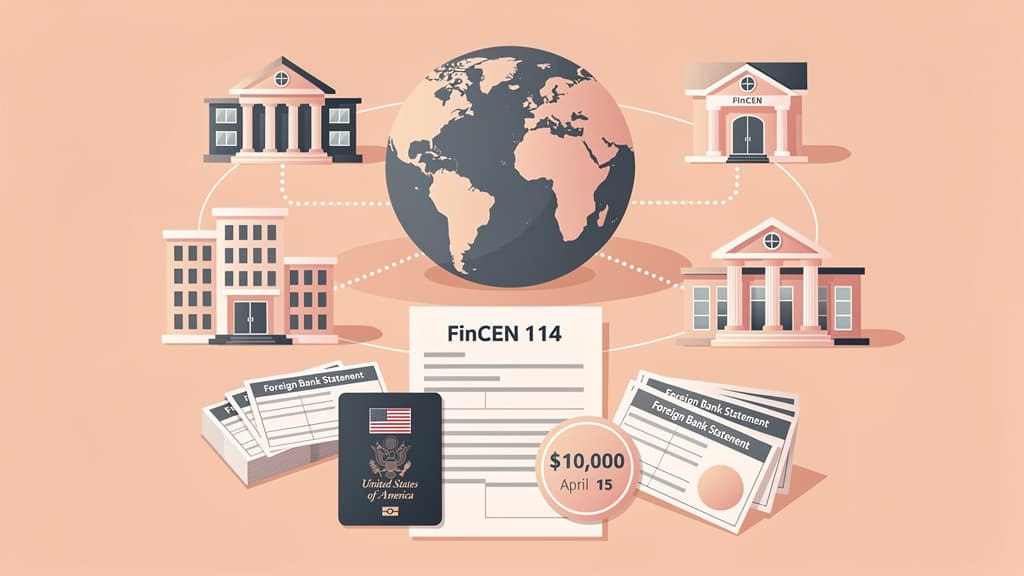
FBAR stands for Report of Foreign Bank and Financial Accounts. Despite its close association with tax compliance, FBAR is not a tax return. It's a disclosure form filed with the Financial Crimes Enforcement Network (FinCEN), a bureau of the US Department of the Treasury. The form's primary purpose is to help the government detect money laundering, tax evasion, and other financial crimes involving offshore accounts.
The legal authority comes from the Bank Secrecy Act of 1970 (31 USC §5314), with implementing regulations at 31 CFR §1010.350. The IRS has been delegated enforcement authority, which is why FBAR comes up in tax compliance — but the filing goes to FinCEN, not the IRS. The current form, FinCEN 114, replaced the older TD F 90-22.1 in 2013 when FinCEN moved to electronic-only filing.
You must file an FBAR if you are a US person and you had a financial interest in or signature authority over one or more foreign financial accounts, and the aggregate value of all those accounts exceeded $10,000 at any point during the calendar year.
Two types of relationships with a foreign account trigger FBAR filing:
Financial interest: You own the account, or you're the owner of record, or you have sufficient interest in the entity that owns the account (generally more than 50% ownership).
Signature authority: You can control the disposition of assets in the account by direct communication with the financial institution, even if the account isn't yours. This commonly applies to officers and employees of companies with foreign bank accounts.
This is the most misunderstood part of FBAR. The $10,000 threshold applies to the combined maximum value of all your foreign financial accounts during the year — not to any single account.
Example: You have three foreign accounts. Account A peaked at $4,000, Account B peaked at $3,500, and Account C peaked at $3,000. None individually exceeded $10,000, but if their combined peak values on any single day during the year exceeded $10,000, you must file. The test looks at the aggregate of the maximum balances on any given day, not the individual peaks on different days.
One number decides it — the combined peak value of every foreign account you hold or can sign on.
$
Add every account's value on the day the combined total was highest — accounts you own plus ones you can sign on. Count joint accounts at full value.
Yes — file FinCEN Form 114
Your combined peak exceeded $10,000, so all the accounts get reported. The FBAR for 2025 accounts was due April 15, 2026, but every filer automatically gets until October 15, 2026 — no request, no form, no penalty in between. File free at FinCEN's BSA E-Filing System; it's an informational report with no tax due.
The stakes for skipping it: up to $16,536 per late report for non-willful violations (per report, not per account, under Bittner v. United States) — and the greater of $165,353 or 50% of the account balance, per account per year, for willful ones. Years behind but reported all the income? The Delinquent FBAR Submission Procedures usually mean zero penalty.
Threshold per 31 CFR §1010.350; penalty maximums set by FinCEN in January 2025, in effect for penalties assessed in 2026. Convert balances to USD at the Treasury year-end rate. Form 8938 (FATCA) is a separate test with separate thresholds.
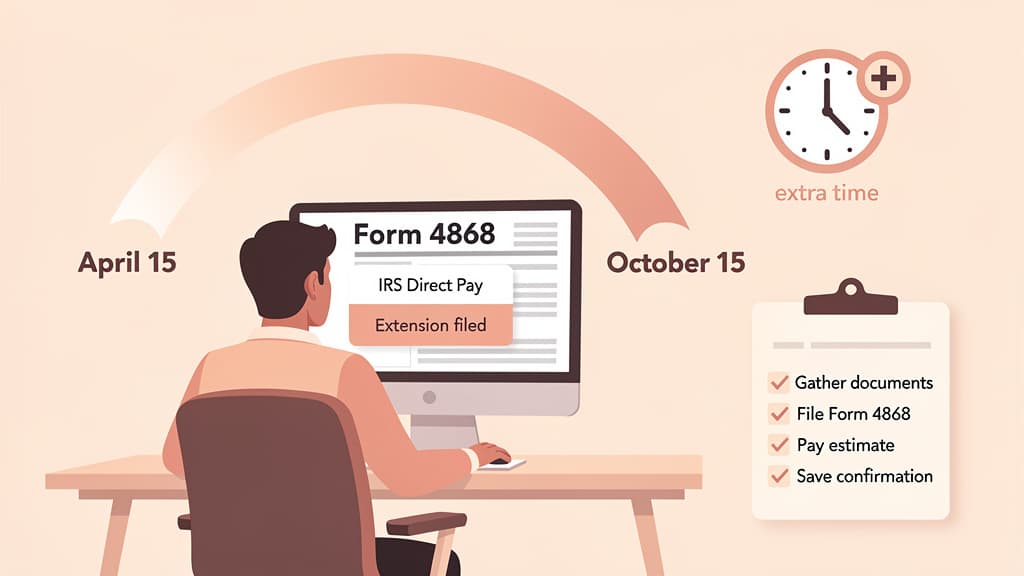
The FBAR deadline for 2025 calendar-year accounts is April 15, 2026, and every filer receives an automatic extension to October 15, 2026. FinCEN grants the extension without any request, so an FBAR submitted in July, August, or September 2026 is on time. (See our full tax deadline calendar for all key dates.)
The FBAR due date is always April 15 of the year following the calendar year being reported, matching the individual tax return deadline.
You already have one. If you missed April 15, the extension to October 15 applies automatically: no Form 4868, no letter to FinCEN, nothing to request. FinCEN Notice 2015-1 established the automatic extension, and the Surface Transportation and Veterans Health Care Choice Improvement Act of 2015 made it permanent. Unlike tax return extensions, there's no risk of late payment penalties because FBAR is an informational filing only, with no tax due.
There is no extension beyond October 15. An FBAR filed after that date is delinquent, even if your income tax return is fully paid and filed.
Prior-year FBAR deadlines have passed: the FBAR for 2022 accounts, for example, was due October 15, 2023 under the automatic extension. If you skipped one or more years, don't wait for the next April. File the late reports now through the Delinquent FBAR Submission Procedures covered below. The IRS does not penalize late FBARs when you reported the account income on your tax returns and it hasn't already contacted you about an examination.
Go to bsaefiling.fincen.treas.gov and select the individual FBAR filing option (individuals file without registering or creating an account; attorneys, CPAs, and enrolled agents filing for clients must register as institutions)
Open FinCEN Form 114 (online form or downloadable PDF version)
Complete the form with information about each foreign account: bank name, account number, type of account, maximum value during the year, and country
Submit electronically — you'll receive a confirmation with a BSA tracking number
Save the confirmation for your records (keep for at least 5 years from the FBAR due date)
For each account, you'll need: the institution's name and address, account number, account type, maximum value during the year (converted to USD using the Treasury's end-of-year exchange rate), and country.
Joint accounts: Each spouse must independently determine whether they meet the $10,000 aggregate threshold. The full value of a jointly-owned account counts toward each holder's aggregate — you don't split the balance. A spouse who doesn't have their own filing requirement can be included on the other spouse's FBAR.
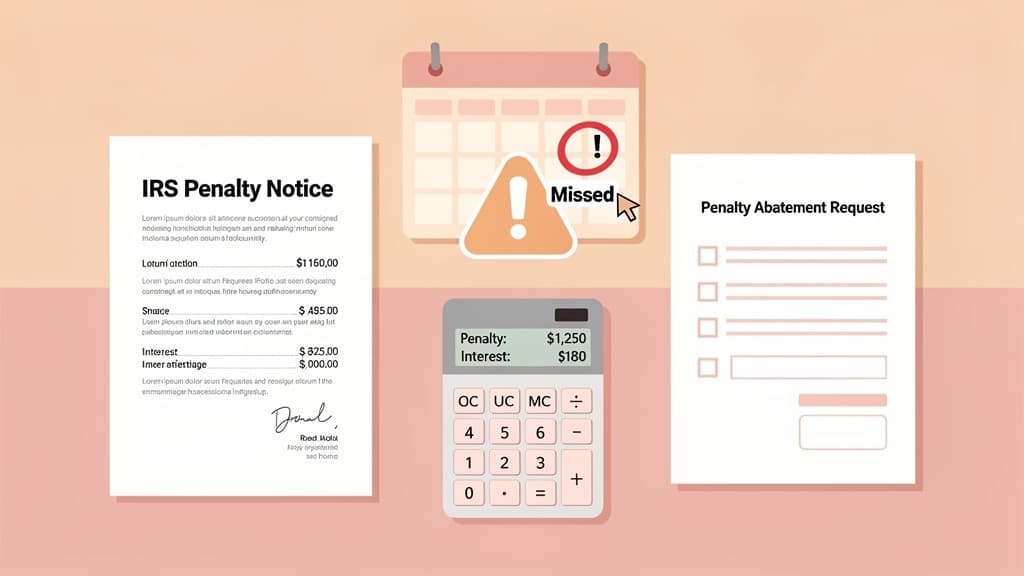
FBAR penalties are among the most severe in the entire US legal system for a compliance obligation. Willful penalties are assessed per account, per year, and can exceed the total balance of the accounts in question. Non-willful penalties apply per late report.
The current non-willful FBAR penalty is up to $16,536 per report, per year: the inflation-adjusted maximum under 31 USC §5321(a)(5)(B)(i), set by FinCEN in January 2025 and still in effect for penalties assessed in 2026. It applies when your failure to file was non-willful: you didn't know about the requirement, or made an honest mistake.
The Supreme Court settled a critical question in Bittner v. United States (2023): the non-willful penalty applies per late report, not per account. One missed FBAR listing 10 accounts is one violation, not ten.
Example: You have 3 unreported accounts and miss filing for 3 years. That is 3 missed reports, so the maximum non-willful penalty is 3 x $16,536 = $49,608 — not 9 x $16,536, which is how the government calculated penalties before Bittner.
If the IRS determines your failure to file was willful (you knew about the requirement and chose not to comply), the penalty jumps dramatically:
The greater of $165,353 or 50% of the account balance at the time of the violation, per account per year (inflation-adjusted amount under 31 USC §5321(a)(5)(C), in effect for penalties assessed in 2026)
Bittner does not help willful violators: willful penalties are still assessed per account, per year.
Example: You have a single unreported account with $500,000 and are found willful for 2 years. Maximum willful penalty: 2 x $250,000 (50% of $500,000) = $500,000 — the entire account balance.
In extreme cases, willful failure to file an FBAR can result in:
Up to $250,000 in fines per violation
Up to 5 years of imprisonment per violation
Both fine and imprisonment
Criminal referrals are rare but do happen, particularly in cases involving large unreported balances, fraudulent activity, or structured transactions designed to evade reporting.
For non-willful violations, a reasonable cause defense may reduce or eliminate penalties — factors include your filing history, whether you reported the foreign income on your tax return, and the steps you took upon learning of the requirement.
For taxpayers whose failure to file was non-willful, the Streamlined Procedures offer a path back to compliance with significantly reduced penalties:
US residents: File 3 years of delinquent tax returns and 6 years of delinquent FBARs. Pay a 5% miscellaneous offshore penalty on the highest aggregate balance of unreported foreign accounts during the 6-year period.
Foreign residents: File 3 years of delinquent tax returns and 6 years of delinquent FBARs. No miscellaneous offshore penalty applies (the 5% penalty is waived for qualifying foreign residents).
The Streamlined Procedures require a certification under penalties of perjury that your failure to file was non-willful. This certification is taken seriously — making a false certification can result in additional penalties.
For taxpayers whose failure was willful (or who aren't comfortable certifying non-willfulness), the IRS Voluntary Disclosure Practice provides a way to come forward and avoid criminal prosecution. This is not a formal "program" with fixed terms — it's handled on a case-by-case basis through IRS Criminal Investigation. Penalties under this path are typically higher than the Streamlined Procedures but far less than what the IRS could assess under a standard examination.
If you have no unreported income (you paid all your taxes but simply didn't file the FBARs), you qualify for the Delinquent FBAR Submission Procedures. File the late FBARs electronically through the BSA E-Filing System and select a reason for late filing on the form's cover page. No separate cover letter is required: the reason selection on the e-filed form serves as your explanation statement. The IRS does not impose a penalty when you properly reported and paid tax on the foreign account income and haven't already been contacted about an examination or delinquent returns.
The most common situation. You moved to the US and still have a bank account back home — for rental income, family support, or simply because you never closed it. When I moved from the UK after building Anna Money, I still had a UK personal account and a savings account; nobody at the border mentions that those now come with an annual Treasury disclosure. If your home-country accounts (combined with any other foreign accounts) exceed $10,000 at any point during the year, you must file.
US citizens holding citizenship in another country must report financial accounts in that country. Americans living abroad must report all their foreign accounts — local checking, savings, investment accounts. Expats benefit from higher Form 8938 thresholds ($200,000/$300,000) but the FBAR threshold stays at $10,000 regardless of where you live.
If your business has accounts with foreign banks, those are reportable. And if you can sign on a company's foreign bank account — even if it's not your money — you may have an FBAR filing obligation. This applies to corporate officers, employees with check-signing authority, and trustees of foreign trusts.
This is the most common mistake — and it's entirely understandable. Many immigrants to the US have no idea that their home-country bank accounts trigger a US reporting requirement. The IRS doesn't send you a reminder to file. You typically learn about FBAR when a tax preparer asks about foreign accounts, when you receive a foreign-sourced income question on your tax return, or when the IRS sends a letter. By then, you may be several years behind.
What to do: If you're a US person with any financial account outside the United States, check whether you need to file. The earlier you address it, the more options you have for penalty reduction.
The $10,000 threshold is not per account — it's the aggregate of all your foreign accounts combined. If you have a $6,000 checking account in one country and a $5,000 savings account in another, you've exceeded the threshold. Both accounts must be reported.
FBAR and Form 8938 have different filing thresholds, go to different agencies, and cover slightly different assets. Many taxpayers with foreign accounts exceeding $50,000 are required to file both. Filing one does not satisfy the requirement for the other.
If your foreign account was open for any part of the year and the aggregate of all your foreign accounts exceeded $10,000 at any point during that year, you must file. An account closed in February is still reportable if the aggregate threshold was met while it was open.
If you have foreign bank accounts alongside domestic ones, keeping track of all your transactions and identifying which accounts may trigger FBAR is a real challenge. Jupid connects to your bank accounts and automatically categorizes your income and expenses with 95.9% accuracy, giving you a clear picture of your financial activity across all your accounts.
When Jupid identifies transactions involving foreign accounts or foreign-sourced income, it flags them so you can determine whether your reporting obligations extend beyond your standard tax return. Instead of manually reviewing bank statements in multiple currencies, you get a consolidated view of your financial picture.
Jupid's WhatsApp and iMessage AI accountant lets you ask questions about your accounts from anywhere. "Do I have any foreign transactions this year?" or "What's my total income from overseas?" — and get answers based on your actual bank data.
You can access Jupid through the web interface, Claude Code, and other AI tools. It's built for business owners who need accurate financial tracking without spending hours on manual bookkeeping.
Determine whether your non-filing was willful or non-willful
Consult a tax professional experienced in international tax compliance
Evaluate the Streamlined Filing Compliance Procedures (non-willful), Voluntary Disclosure Practice (willful), or Delinquent FBAR Submission Procedures (no unreported income)
FBAR is one of the most consequential filings in US tax law, and it's the one that catches the most people off guard. If you have any financial account outside the United States — a bank account in your home country, a brokerage account you opened while living abroad, signature authority on your company's foreign account — check whether the aggregate value exceeded $10,000 at any point during the year. If it did, file FinCEN 114.
The automatic extension to October 15, 2026 means a mid-year filing for your 2025 accounts is still on time. If you're years behind, the Delinquent FBAR Submission Procedures (no unreported income) or the Streamlined Filing Compliance Procedures (5% penalty) offer a path back to compliance instead of the standard penalties that can consume an entire account balance.
Don't wait for the IRS to ask about your foreign accounts. File proactively, and keep your records for at least five years.
This article provides general information about FBAR (FinCEN 114) filing requirements and should not be considered tax or legal advice. FBAR rules are complex, and specific situations — including joint accounts, trusts, signature authority, and retirement accounts — may have additional nuances not fully covered here. Penalty amounts are inflation-adjusted and may change. For advice specific to your situation, consult with a qualified tax professional or attorney experienced in international tax compliance.
Fintech CEO with 10+ years building accounting and financial technology products. Previously co-founded and scaled an AI-powered accounting platform to $30M revenue and 100K+ business users, achieving 30,000 customers per accountant through automation — recognized by CNBC as a top fintech company. Holds a Master's in Management Information Systems. At Jupid, he leads the development of AI-native bookkeeping, tax, and compliance tools designed for freelancers and small business owners.