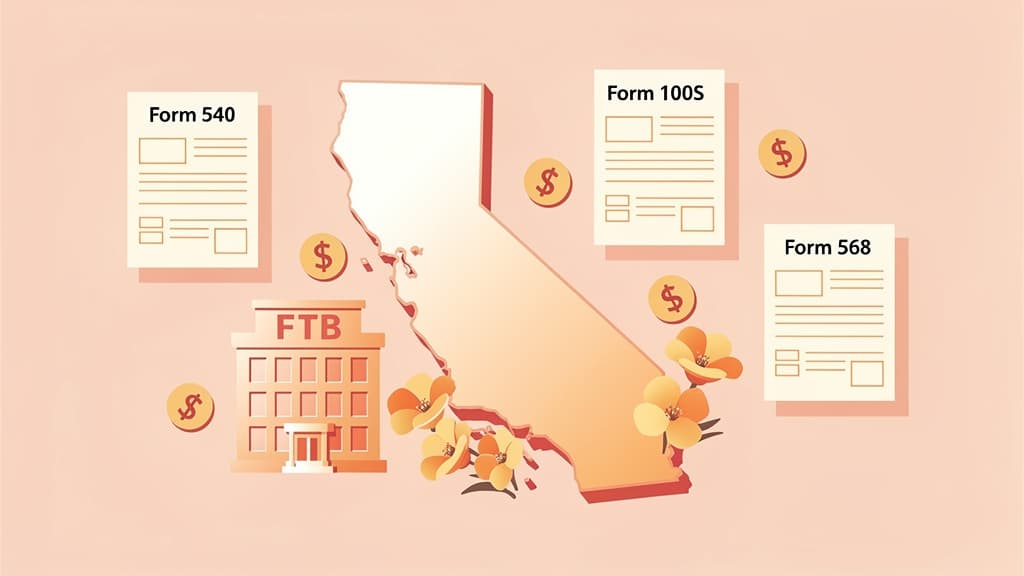
California has no estimated tax payment due in September 2026: the state weights individual estimated payments 30% / 40% / 0% / 30%, so the third-quarter installment is $0 and the next payment (Q4, 30%) is due January 15, 2027. The remaining 2026 filing deadlines are September 15 for extended S-corp returns (Form 100S), October 15 for extended individual (Form 540), partnership (Form 565), and LLC (Form 568) returns, and November 16 for extended C-corp returns (Form 100).
If you missed a spring deadline, the Franchise Tax Board (FTB) charges a late-payment penalty of 5% of the unpaid tax plus 0.5% per month, with interest running at 7% through December 31, 2026. Paying now through FTB Web Pay stops the monthly accrual.
Key takeaways:
No September estimated payment for individuals. California's 30/40/0/30 split sets Q3 at 0%. Q4 (30%) is due January 15, 2027; corporations pay their 30% fourth installment by December 15, 2026
Extended returns: Form 100S due September 15; Forms 540, 565, and 568 due October 15; Form 100 due November 16, 2026
The $800 franchise tax (Form 3522) was due April 15, 2026. LLCs formed in 2026 owe it by the 15th day of the 4th month after registration; the first-year exemption expired for LLCs formed after 2023
The estimated LLC fee (Form 3536) was due June 15, 2026 for LLCs expecting $250,000 or more in California income. The underpayment penalty is 10% of the shortfall
PTE elective tax: the first 2026 payment was due June 15. Under the rules for 2026-2030, a missed payment no longer forfeits the election but reduces the credit by 12.5% of the unpaid amount
Pick your filer type and where you stand — your remaining dates come straight from the calendar above.
Your next FTB deadline
October 15, 2026
Extended Form 540 filing deadline. California's extension to file is automatic — no form required — but any tax was still due April 15, 2026.
September 15 estimate (Q3)0% — no payment due
Q4 estimate (30%, Form 540-ES)January 15, 2027
Original deadline (passed)April 15, 2026
Calendar-year filers, 2026 tax year, FTB dates as covered in this guide. Sales tax (CDTFA) runs on its own schedule — next quarterly return July 31, 2026. Fiscal-year entities count from their own year-end.
California residents and part-year residents file Form 540 to report their state income tax. California's top marginal rate is 13.3%, the highest state income tax rate in the country, and kicks in at taxable income above $1 million.
Original deadline: April 15, 2026 (passed)
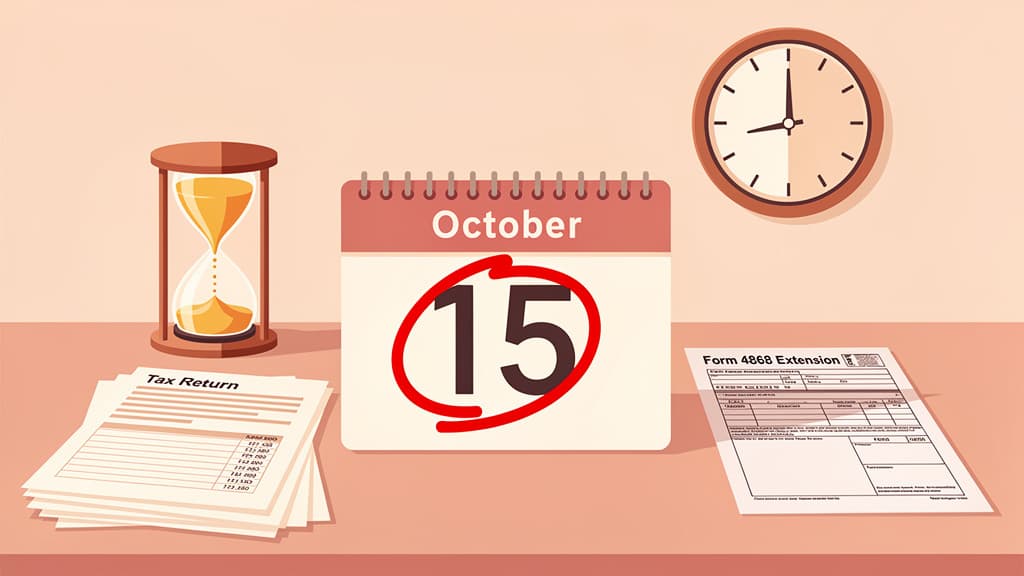
Extended deadline: October 15, 2026
California grants an automatic 6-month extension for individuals. Unlike the federal system where you file Form 4868, California does not require a separate extension form. If you did not file by April 15, you automatically have until October 15, 2026, as long as you paid any tax owed by April 15.
If you owe tax and have not paid yet, pay now and still file by October 15. The FTB's delinquent filing penalty (5% of unpaid tax per month, up to 25%) only applies when you miss the payment and the extended filing deadline, so filing by October 15 keeps you at the much smaller late-payment penalty of 5% plus 0.5% per month.
Original deadline: March 16, 2026* (passed)
Extended deadline: September 15, 2026
Tax rate: 1.5% of net income (minimum $800 franchise tax)
*March 15 falls on a Sunday in 2026, so the deadline moved to Monday, March 16.
California S-Corps pay the greater of $800 or 1.5% of their net income. This is on top of the income that passes through to shareholders and is taxed on their personal returns. File Form 100S with the FTB.
Original deadline: March 16, 2026* (passed)
Extended deadline: October 15, 2026
*Same weekend shift as S-Corps.
Partnerships file Form 565. The partnership itself generally does not pay income tax, but it must file an informational return and issue Schedule K-1s to partners.
Note the extension mismatch with the IRS: California grants partnerships seven months (to October 15, 2026), one month longer than the federal extended Form 1065 deadline of September 15, 2026. An extended California 565 filed in early October is on time; the same timing on the federal side is late.
Original deadline: April 15, 2026 (passed)
Extended deadline: November 16, 2026*
Tax rate: 8.84% of net income (minimum $800 franchise tax)
*California gives C-Corps a 7-month extension, to the 15th day of the 11th month. November 15 falls on a Sunday in 2026, so the deadline moves to Monday, November 16.
California C-Corps pay the greater of $800 or 8.84% of net income. Banks and financial corporations pay a slightly higher rate of 10.84%. The extended California deadline is a full month after the federal extended deadline of October 15, but any tax owed was still due April 15.
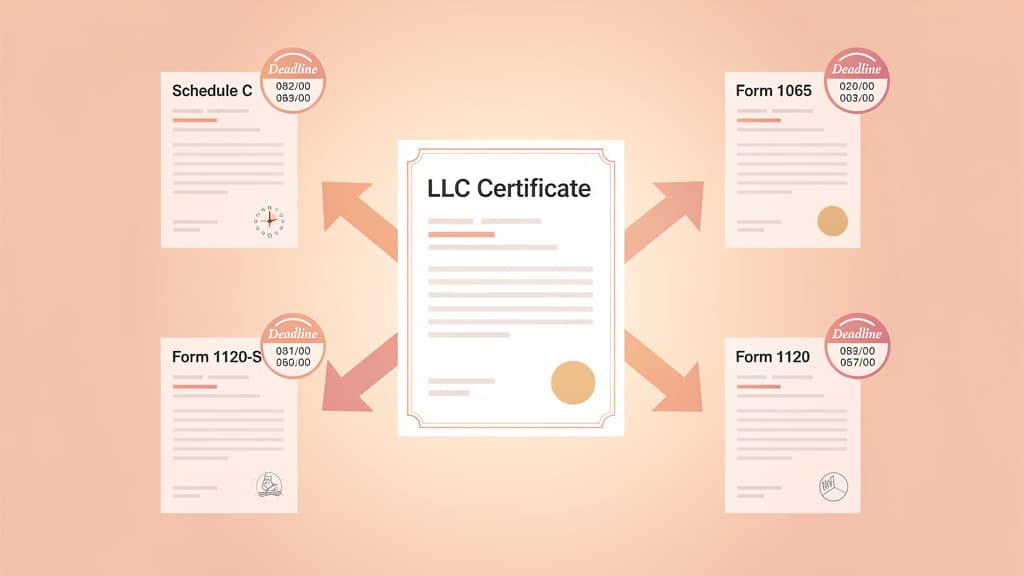
Form 568 was due March 16, 2026 for multi-member LLCs taxed as partnerships and April 15, 2026 for single-member LLCs owned by an individual. On extension, both have until October 15, 2026 to file. Full breakdown by classification:
LLC Type
California Form
Original Deadline
Extended Deadline
Multi-member LLC (partnership)
Form 568
March 16, 2026
October 15, 2026
Single-member LLC (disregarded)
Form 568
April 15, 2026
October 15, 2026
LLC electing S-Corp
Form 100S
March 16, 2026
September 15, 2026
LLC electing C-Corp
Form 100
April 15, 2026
November 16, 2026
Unless it elected corporate taxation, a California LLC files Form 568 (Limited Liability Company Return of Income) and pays the $800 minimum franchise tax and any applicable LLC fee.
Every LLC, corporation, and limited partnership registered in California owes an $800 minimum franchise tax each year — regardless of income, activity, or profit. This is a privilege tax for the right to do business in the state.
Calendar-year entities: April 15 (for 2026, this date has passed; pay through Web Pay if you missed it, since the late-payment penalty grows 0.5% per month)
Fiscal-year entities: 15th day of the 4th month after the fiscal year begins
New entities: 15th day of the 4th month after formation/registration
For LLCs, the $800 is paid using Form 3522 (LLC Tax Voucher).
Yes. An LLC formed in 2024 or later owes the $800 annual tax for its first taxable year. The first-year exemption created by AB 85 applied only to LLCs, LPs, and LLPs formed between January 1, 2021 and December 31, 2023, and it has expired.
The first-year payment is due by the 15th day of the 4th month after you file with the Secretary of State. Form an LLC on July 20, 2026, and your first $800 is due October 15, 2026.
Two first-year escapes still exist:
Short-form cancellation. Cancel the LLC within one year of forming it (SOS Form LLC-4/8) and the first-year $800 is waived.
Corporations are different. Newly incorporated C-Corps and S-Corps are not subject to the $800 minimum franchise tax for their first taxable year; they pay tax on actual net income instead. This corporate rule does not extend to LLCs taxed as partnerships or disregarded entities.
This catches many business owners: even if your LLC is completely inactive — no revenue, no transactions, no employees — you still owe $800 per year unless you formally dissolve or cancel the LLC with the California Secretary of State. If you're not using your LLC, dissolve it. Otherwise the $800 keeps accruing, plus late penalties and interest.
In addition to the $800 minimum franchise tax, LLCs with total income of $250,000 or more owe a graduated LLC fee. This is separate from the franchise tax and is based on total income from California sources: gross receipts attributable to California, before any deductions.
Estimated LLC fee (Form 3536): Due by June 15 of the current tax year. For 2026, that was June 15, 2026, and it has passed. If your LLC reasonably expects total California income of $250,000 or more, this payment is required. It is easy to forget because it falls outside the normal filing cycle.
Missed the June 15 payment? The penalty is 10% of the underpaid fee (R&TC §17942), plus interest. There is a safe harbor: no penalty applies if your 2026 estimated payment at least equaled your actual 2025 LLC fee. If neither happened, pay through Web Pay now; the fee itself is still reconciled on Form 568.
Final LLC fee (Form 568): Due by the original return due date — March 16, 2026 for multi-member LLCs, April 15, 2026 for single-member LLCs. If you overpaid on the estimate, you get a credit. If you underpaid, you owe the difference.
"Total income" means gross receipts. It includes all California-source revenue before deductions — not net profit. An LLC with $500,000 in California revenue and $490,000 in expenses still owes the $2,500 LLC fee.
California requires estimated tax payments from individuals who expect to owe at least $500 in state tax after withholding and credits ($250 if married/RDP filing separately). Individuals pay with Form 540-ES vouchers or FTB Web Pay; corporations use Form 100-ES (covered below).
If you skipped April or June, the estimate penalty accrues on the shortfall at the FTB's interest rate (7% annualized through December 31, 2026) from each installment's due date until you pay. Paying mid-year cuts the penalty; it is calculated per day late.
This is the single biggest difference between California and federal estimated taxes. The IRS expects four equal payments of 25% each quarter. California uses a completely different split:
Q1: 30% of your required annual payment
Q2: 40% of your required annual payment
Q3: 0% — no payment due
Q4: 30% of your required annual payment
If you follow the federal schedule and pay 25% each quarter to California, you'll be underpaid in Q1 and Q2, triggering penalties even though you paid the same total amount by year-end. At Anna Money we supported 60,000+ UK businesses that dealt with exactly one national tax calendar; California runs a second, differently weighted calendar on top of the IRS one, and this split is where newcomers slip first.
California corporations pay estimated tax with Form 100-ES in four installments, due the 15th day of the 4th, 6th, 9th, and 12th months of the tax year: April 15, June 15, September 15, and December 15, 2026 for calendar-year filers. The weighting is the same 30% / 40% / 0% / 30% split individuals use, so the only corporate installment left in 2026 is the 30% payment due December 15, 2026.
Two corporate-specific rules from the Form 100-ES instructions: at least the $800 minimum franchise tax must be paid with the first installment, and S-Corps use the same voucher and schedule as C-Corps (with tax computed at 1.5% instead of 8.84%).
California allows qualifying pass-through entities (S-Corps, partnerships, LLCs taxed as partnerships) to elect to pay a 9.3% tax at the entity level on qualified net income. Owners then receive a credit on their personal returns. Originally set to expire after 2025, the elective tax now runs through taxable years beginning before January 1, 2031.
The PTE tax works around the federal SALT deduction cap. The One Big Beautiful Bill Act raised the cap to $40,000 for 2025 ($40,400 for 2026), but the cap phases back down toward a $10,000 floor once modified AGI passes roughly $505,000 in 2026. By paying state tax at the entity level, the tax becomes a deductible business expense with no cap, so the election still saves real money for high-earning owners.
The 2026 election itself is made on the entity's timely filed original 2026 return (using FTB 3804), due March 15, 2027 for calendar-year S-Corps and partnerships. The election cannot be made on an amended return, is annual, and does not carry over from prior years.
The tax is paid in two installments:
June 15, 2026 (passed): the greater of $1,000 or 50% of the elective tax paid for 2025, via Web Pay or the Form 3893 voucher
Original return due date (March 15, 2027, without regard to extensions): the remaining balance
Missed the June 15, 2026 payment? The rules changed for taxable years 2026 through 2030: the entity may still make the PTE election, but each owner's PTE credit is reduced by 12.5% of their share of the amount left unpaid on June 15. For 2022-2025 tax years, a missed June payment forfeited the election entirely; that is no longer the case.
California requires pass-through entities to withhold 7% of income distributed to nonresident owners. Withholding payments are made quarterly using Form 592-Q, due April 15, June 15, and September 15, 2026, and January 15, 2027. The dates match the estimated-tax calendar, but there is no 0% quarter: each payment covers the income actually distributed in that period, so a September 592-Q payment can be due even though no September estimated payment exists.
An annual Form 592 (Resident and Nonresident Withholding Statement) must be filed to reconcile all withholding for the year. This is due by the entity's return due date.
Each nonresident member receives Form 592-B showing the amount withheld on their behalf. This is similar to a 1099 — the nonresident uses it to claim a credit on their state return.
Sales tax runs on a separate calendar from everything above. It is administered by the California Department of Tax and Fee Administration (CDTFA), not the FTB. Quarterly filers owe a return on the last day of the month after each quarter; when that day falls on a weekend or state holiday, CDTFA extends the due date to the next business day:
Quarter
Period
Return Due
Q1 2026
January – March
April 30, 2026 (passed)
Q2 2026
April – June
July 31, 2026
Q3 2026
July – September
November 2, 2026 (October 31 is a Saturday)
Q4 2026
October – December
February 1, 2027 (January 31 is a Sunday)
Monthly filers owe each return by the last day of the following month. Larger sellers on the quarterly-prepay basis also make prepayments by the 24th of the first two months of each quarter. CDTFA assigns your filing frequency at registration based on expected sales volume.
For a business owner reading this in July 2026, the immediate date is July 31: the Q2 return. Check your exact schedule for California and every other state you sell into with the sales tax due dates tool.
5% of the unpaid tax for each month (or fraction of a month) the return is late, up to a maximum of 25%. This is calculated on the tax due after credits and payments.
5% of the unpaid tax, plus 0.5% per month (capped at 40 months) until paid. This is a one-time penalty plus a monthly accrual, unlike the federal 0.5%-per-month structure. For LLCs, the FTB computes it on the unpaid annual tax, LLC fee, and nonconsenting nonresident tax combined.
If the FTB sends a demand to file and you don't respond within the time stated, a 25% penalty is added to the tax due. This is on top of the late filing and late payment penalties.
Interest on unpaid tax accrues from the original due date. The FTB adjusts rates every six months, not quarterly like the IRS: the rate on personal income tax underpayments is 7% from July 1 through December 31, 2026, unchanged from the prior twelve months.
If you underpay estimated taxes, or pay them on the wrong schedule (remember, California uses 30/40/0/30, not equal quarters), the FTB charges a penalty on the underpaid amount for each period.
This is the most common California-specific mistake. Federal estimated taxes are split 25/25/25/25 across four quarters. California requires 30/40/0/30. If you set up auto-payments based on the federal schedule, you'll be underpaid in Q1 and Q2 and face penalties — even though you paid the correct annual total. Use the California Quarterly Tax Calculator to get the right amounts.
If your California LLC is registered with the Secretary of State, you owe $800 every year — period. It doesn't matter if the LLC had zero revenue, zero activity, or has been dormant for years. The only way to stop the $800 from accruing is to formally dissolve or cancel the LLC. Business owners who "forgot about" an old LLC have come back to find thousands in back taxes, penalties, and interest.
The estimated LLC fee (Form 3536) has a June 15 due date that sits outside the normal filing season. If your LLC expects total income of $250,000 or more, this payment is required. Many business owners handle their April 15 obligations and assume they're done until the next estimated tax payment — missing the LLC fee entirely.
The pass-through entity elective tax election must be made on a timely filed original return. You can't amend a late-filed return to make the election retroactively. If the PTE election is part of your tax strategy, the entity return must be filed (or validly extended) on time. For the 2026 election, that means the March 15, 2027 deadline, with extended returns due September 15, 2027 for S-Corps and October 15, 2027 for partnerships. File late, and the SALT workaround is gone for the entire tax year.
California business owners deal with twice the complexity: federal deadlines from the IRS, state deadlines from the FTB, the $800 franchise tax, the LLC fee, and a quarterly estimated payment schedule that doesn't match the federal one. Keeping track of all of this while running a business is where things fall through the cracks.
Jupid connects to your bank accounts and categorizes your income and expenses with 95.9% accuracy. That matters for California specifically because the LLC fee is based on California-source gross receipts — not net profit. Knowing your actual revenue in real time means you can estimate your LLC fee correctly and avoid underpayment surprises in June.
The WhatsApp and iMessage AI accountant lets you check your California tax status from your phone. Ask "What's my estimated California tax for Q2?" and get an answer based on real transactions — calculated with the 30/40/0/30 split, not the federal 25% per quarter.
Jupid works through a web interface, Claude Code, and other AI tools — so you can manage your California obligations however fits your workflow.
Catch up on anything missed via Web Pay to stop penalty accrual: April 15 payments (Form 540 tax, $800 franchise tax, Q1 estimate) and June 15 payments (Q2 estimate, Form 3536, PTE Payment 1)
File the Q2 sales tax return with CDTFA by July 31 (if you collect sales tax)
Skip September 15: California requires 0% for Q3 estimates
File extended returns: Form 100S by September 15; Forms 540, 565, 568 by October 15; Form 100 by November 16
Corporations: pay the Q4 estimate (30%, Form 100-ES) by December 15
Individuals: pay the Q4 estimate (30%, Form 540-ES) by January 15, 2027
California's tax system is one of the most complex in the country for businesses. Between the FTB and the IRS, you're managing two complete sets of deadlines, two payment schedules, and two penalty regimes. The franchise tax hits even dormant entities, the LLC fee is based on gross income rather than profit, and the 30/40/0/30 estimated payment schedule catches business owners who assume it mirrors the federal system.
The approach that works: treat California as a separate compliance calendar. Set up FTB Web Pay, mark every deadline independently from your federal calendar, and calculate your estimated payments using California's actual schedule — not the federal one.
If you're forming a business in California now, know the first-year rules: new corporations skip the $800 minimum franchise tax for their first taxable year, but a new LLC owes it by the 15th day of the 4th month after registration; the LLC first-year exemption expired at the end of 2023. The gross-receipts LLC fee starts at $250,000 in California-source income.
Disclaimer
This article provides general information about 2026 California state tax deadlines and should not be considered tax advice. Tax deadlines can shift when they fall on weekends or holidays. Filing requirements depend on your entity type, California residency status, and specific business circumstances. For advice specific to your situation, consult with a qualified tax professional or contact the California Franchise Tax Board directly at ftb.ca.gov.
Fintech CEO with 10+ years building accounting and financial technology products. Previously co-founded and scaled an AI-powered accounting platform to $30M revenue and 100K+ business users, achieving 30,000 customers per accountant through automation — recognized by CNBC as a top fintech company. Holds a Master's in Management Information Systems. At Jupid, he leads the development of AI-native bookkeeping, tax, and compliance tools designed for freelancers and small business owners.